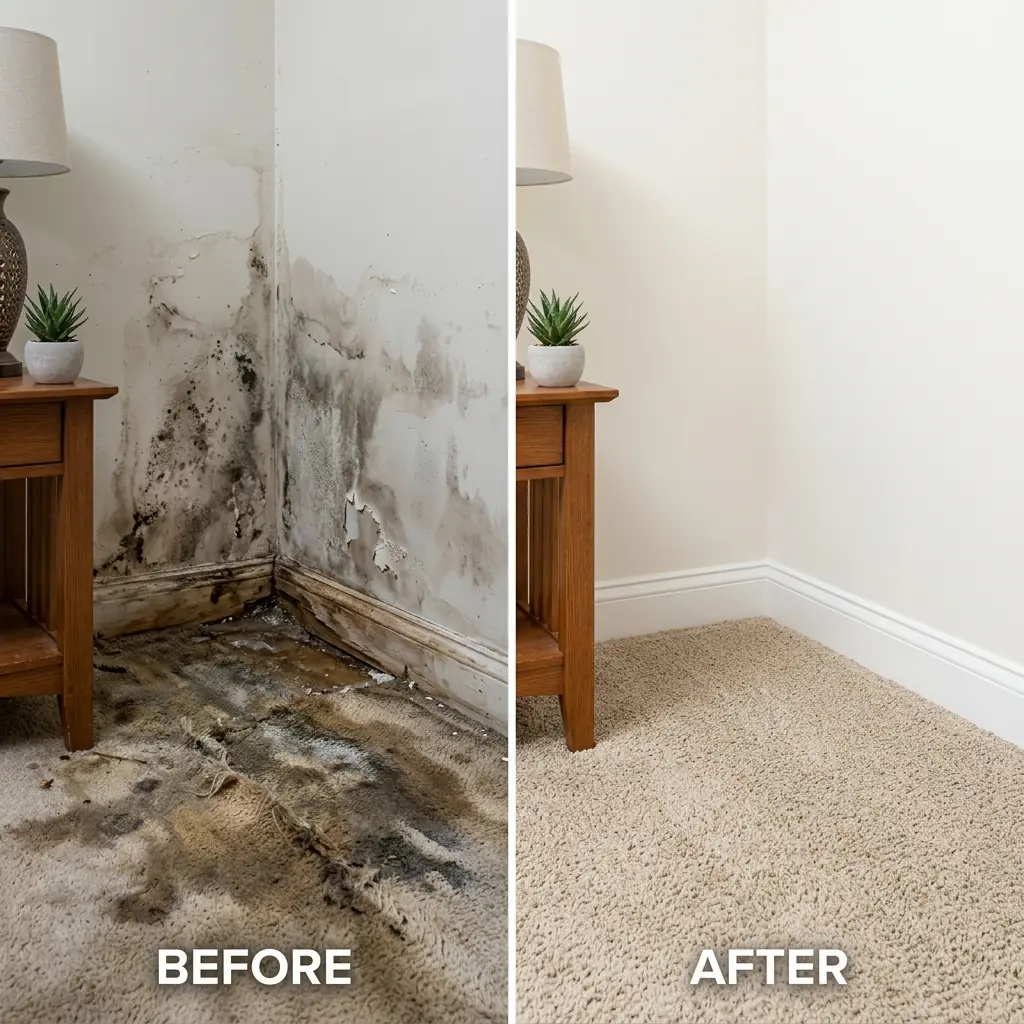
What Remediation Actually Means
Remediation refers to the immediate response that stops active damage and removes the hazard. For water damage, that means extracting standing water, drying affected materials, and in mold cases, containing and removing contaminated material. Remediation is reactive and time-sensitive: it's the work that happens in the first hours and days after water enters your home, before any rebuilding starts. The goal is to stop the situation from getting worse, not to make the space look the way it did before.
What Restoration Actually Means
Restoration is the broader process that returns your property to its pre-damage condition. It includes remediation as a first phase, but extends into repairs, rebuilding, and finishing work, replacing drywall, repainting, reinstalling flooring, and any structural repair needed. Restoration is the complete arc from the moment water enters your home to the moment your space looks and functions the way it did before the event.
Why the Distinction Matters for Your Insurance Claim
Insurance adjusters often separate mitigation and remediation costs from rebuild and restoration costs, and understanding which phase you're in helps you track what's been done and what's still ahead. Our water mitigation service documents the remediation phase specifically, with moisture readings and extraction logs your adjuster needs before authorizing the restoration phase.
Does Every Job Need Both Phases?
Not always. A small, clean-water spill caught quickly might only need remediation, extraction and drying, with no visible damage left to restore. A basement flood that sat for days before discovery usually needs both phases: remediation to stop the active damage and remove what can't be saved, then restoration to rebuild what was lost.
How We Handle Both Phases in Wilmington
We don't hand you off to a different company between phases. Our crew handles the remediation work, extraction, drying, containment, and antimicrobial treatment when needed, then coordinates the restoration work that follows, whether that's our own crew or a contractor we recommend for larger rebuild scopes. Our emergency water damage restoration service covers the remediation phase from the moment you call, with full documentation that carries into the restoration phase.
What to Ask When You Call a Restoration Company
Ask specifically whether the quote you're given covers remediation only, or remediation plus restoration. A vague quote that doesn't distinguish between the two phases makes it harder to compare against your insurance coverage, which often treats them differently. Our structural drying service is part of remediation, verified against IICRC S500 standards before any restoration work begins.
If you're not sure which phase your Wilmington property needs, call us and we'll assess it honestly. Reach us at (302) 360-1217 for a no-obligation estimate that tells you exactly what's remediation and what's restoration.