Why Wilmington Basements Flood More Than You'd Expect
Wilmington sits near the confluence of the Christina River and Brandywine Creek, and the city regularly takes on nor'easter and hurricane-remnant rainfall that raises the local water table. Older neighborhoods like Cool Spring and Wawaset Park have full basements built decades ago, often with foundation waterproofing that's well past its original service life.
Sump Pump Failure
A sump pump that fails during heavy rain, or simply can't keep pace with the volume coming in, is one of the most common basement flooding causes we see. Power outages during storms compound this, since a sump pump without battery backup stops working at exactly the moment it's needed most. Our basement water damage service responds to this specific scenario regularly.
Foundation Seepage
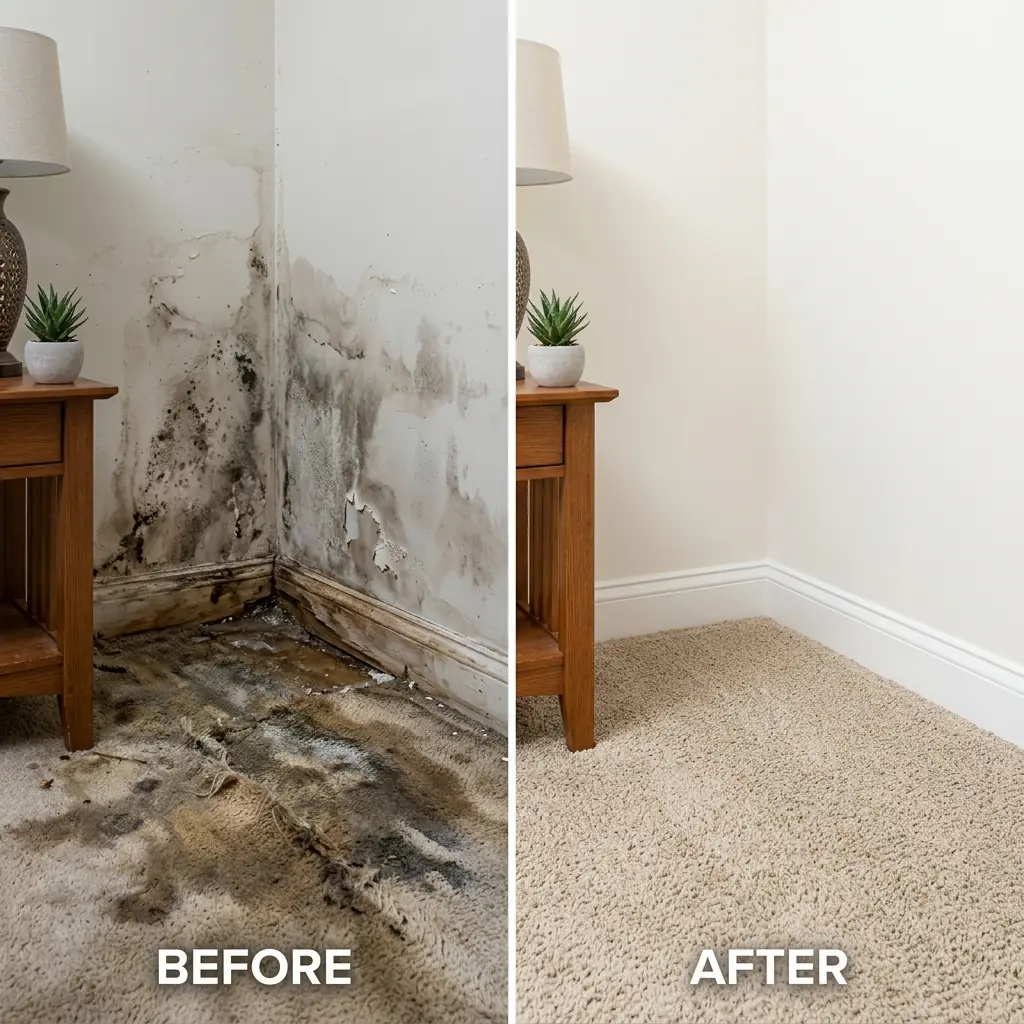
Older stone and masonry foundations common in historic Wilmington neighborhoods can let groundwater seep through cracks during sustained wet weather, creating a slow, recurring dampness rather than a sudden flood. This pattern often goes unnoticed for a while since it doesn't look like a dramatic event, but it raises mold risk just the same.
Sewer Backup
Aging sewer infrastructure in some parts of the city can back up during intense rainfall, sending contaminated water into a basement through floor drains. This requires different handling than clean groundwater, since Category 3 black water needs full biohazard protocol. Our sewage cleanup team handles this distinction correctly from the first assessment.
What to Do in the First Hour
Avoid entering a flooded basement if there's any chance of electrical exposure, especially near outlets or appliances sitting in water. Document what you can see from a safe distance, and call for extraction as soon as possible, since basement humidity accelerates mold risk faster than above-grade rooms.
How Extraction and Drying Work for a Flooded Basement
Submersible pumps and truck-mount extraction clear standing water, then dehumidifiers sized for basement humidity loads run alongside air movers until the space verifies dry against IICRC S500 standards. Our structural drying equipment is calibrated specifically for basement conditions, not just a smaller version of what we'd use upstairs.
Preventing the Next Basement Flood
A sump pump with battery backup, regular foundation inspection, and addressing any visible cracks early all reduce the odds of a repeat event. We're glad to point out anything we notice during a cleanup that's worth addressing before the next storm.
Dealing with a flooded basement right now? Call us at (302) 360-1217. We respond throughout Wilmington, including older neighborhoods like Wawaset Park and Cool Spring where this happens most.