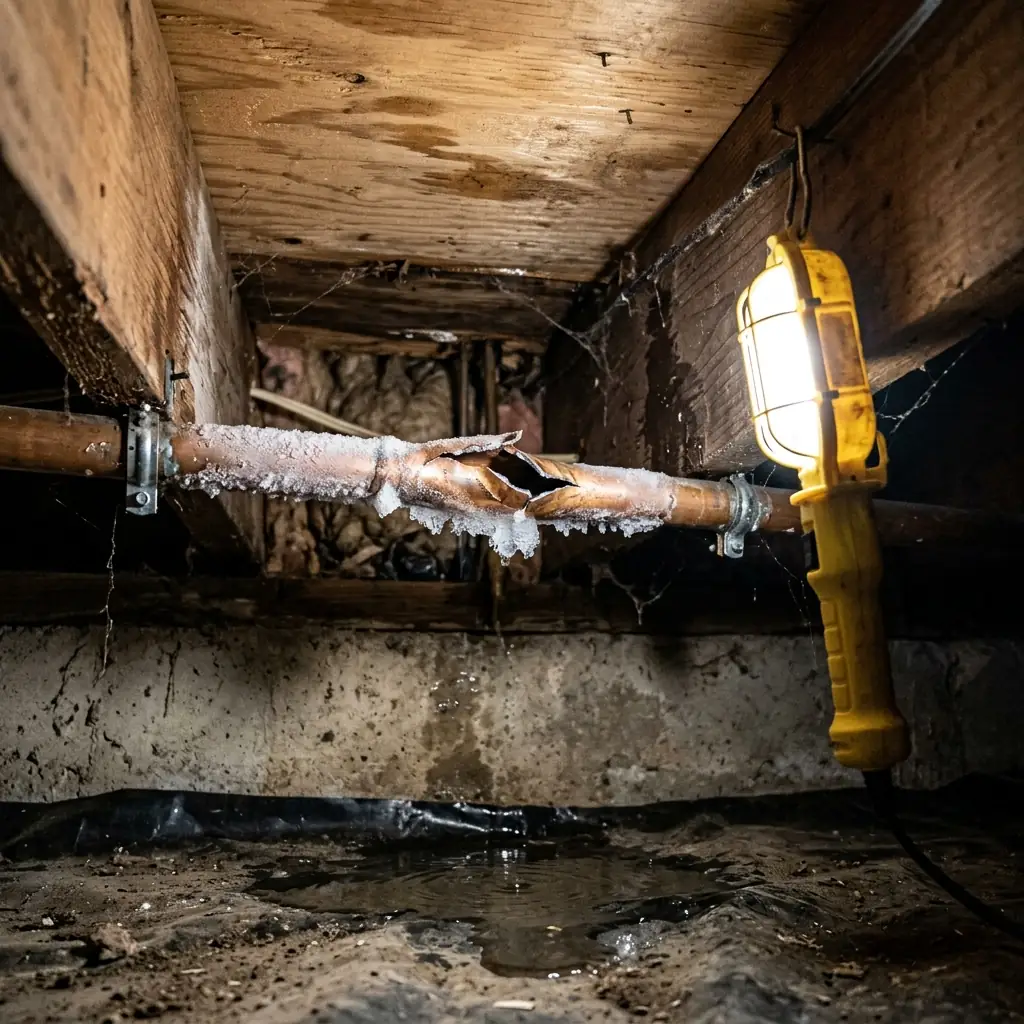
Why Pipes Burst When They Freeze
Water expands as it turns to ice, and that expansion puts pressure on pipe walls that can exceed what the material can handle, especially in older galvanized or copper plumbing common in Wilmington's historic homes. The break often happens at a weak point and isn't discovered until the ice thaws and water starts flowing, sometimes hours or days after the actual freeze.
Insulate Pipes in Unheated Areas
Any pipe running through an unheated basement, crawlspace, attic, or exterior wall is at risk. Foam pipe insulation sleeves are inexpensive and install easily over exposed sections, and they're one of the highest-value, lowest-cost prevention steps available.
Keep a Trickle of Water Running During Extreme Cold
During the coldest stretches of winter, letting faucets connected to exposed pipes run at a slow trickle keeps water moving, which makes freezing significantly less likely than standing water in a pipe.
Seal Drafts Near Pipe Locations
Cold air infiltration through gaps near foundation vents, exterior wall penetrations, or basement windows can drop the temperature around nearby pipes even if the rest of the space stays reasonably warm. Sealing these gaps helps protect pipes that insulation alone might miss.
Keep Your Basement and Crawlspace Above Freezing
If your basement has any heat source, even a small space heater used carefully, keeping it above freezing during cold snaps protects every pipe running through that space. Our basement water damage team sees a clear pattern of pipe failures concentrated in unheated basement zones.
Know Where Your Main Shutoff Valve Is, Before You Need It
If a pipe does burst despite precautions, knowing exactly where your main shutoff valve is and testing that it actually turns smoothly saves critical time. Our burst pipe water damage page covers what happens from the moment you call us after a freeze event.
What to Do If You Suspect a Pipe Has Already Frozen
If you notice reduced water flow from a fixture during a cold snap, that's often a sign of a partially frozen pipe before it bursts. Shutting off the water to that line and calling a plumber before it fully freezes and splits can prevent the burst entirely.
Already dealing with a burst pipe in Wilmington? Call us immediately at (302) 360-1217. We respond 24/7, including overnight during winter storms.