What Happens to Mold Spores in the First 24 Hours After Water Damage
Mold spores are present in every building at low concentrations. They're always there, held in check by the absence of moisture. The moment building materials become wet and stay wet, mold spores have the conditions they need to germinate. According to IICRC S500-2021, mold colonization can begin within 24 to 48 hours of water exposure under typical indoor conditions. The first 24 hours is the window in which professional extraction and structural drying can prevent mold growth entirely, before it starts.
Why Wilmington's Basements Are Especially Vulnerable
Basement humidity stays elevated longer than above-grade rooms even without an active water event, and Wilmington's older full-basement construction often lacks the vapor barriers modern homes have. When a basement does take on water, from a sump pump failure or a nor'easter, the existing humidity load means the mold window can close faster there than in a living room upstairs. Professional LGR dehumidifiers remove moisture from the air even at low humidity levels, actively pulling moisture out of materials rather than waiting for it to evaporate.
Visible Mold vs Hidden Mold: How to Tell the Difference
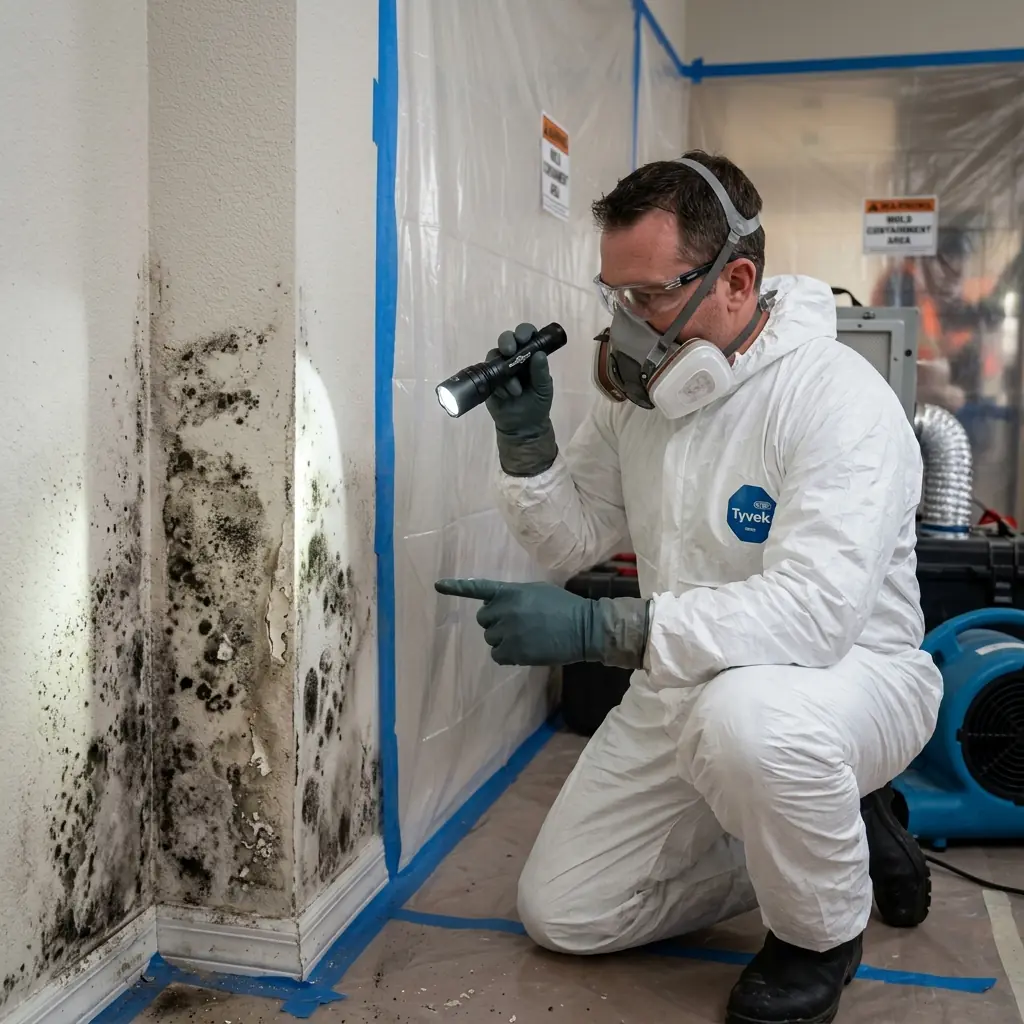
Visible mold on the surface of drywall or baseboard trim represents a late-stage mold event. By the time mold is visible on the surface, it's been colonizing inside the wall cavity for some time. Hidden mold is far more common than visible mold: it grows on the back face of drywall, on wood framing inside wall cavities, and on the paper backing of insulation. FLIR thermal imaging and moisture meters are required to locate and quantify hidden mold. Visual inspection alone misses it.
Is the Mold in Your Wilmington Home Dangerous?
All mold should be treated as a health concern. The specific species determination is less important than the presence of active mold growth in a living space. The priority is professional removal following EPA guidelines, not species identification, and it starts with the same extraction and drying process that prevents mold in the first place.
What IICRC-Certified Mold Remediation Actually Involves
IICRC-certified mold remediation under ANSI/IICRC S520 involves containment of the affected area with negative air pressure to prevent cross-contamination, HEPA-filtered air scrubbing running continuously during work, removal of all mold-contaminated materials following defined thresholds, EPA-registered antimicrobial treatment of affected structural surfaces, and post-remediation clearance assessment to verify the work is complete. Delaware does not require a specific state license for mold remediation contractors, so verifying IICRC certification directly is the credential that actually matters here.
What Happens When Water Damage Treatment Is Delayed Past 48 Hours
Once the 24 to 48 hour window closes, the restoration scope changes. Before that window closes, the goal is drying in place. After it closes, the goal is drying plus mold prevention or removal. Drywall paper that's stayed wet that long can carry early-stage mold growth on the back face, and wood framing in wet wall cavities can show microbial activity. The same materials that could have been dried and left in place now may require demolition, removal, and replacement instead.
If water damage in your Wilmington home wasn't treated within the first day, mold is likely already developing. Call us at (302) 360-1217. Our mold remediation service is IICRC-certified for every scope, from post-water-damage mold prevention through full contamination events, whether you're near Cool Spring or anywhere else in Wilmington.