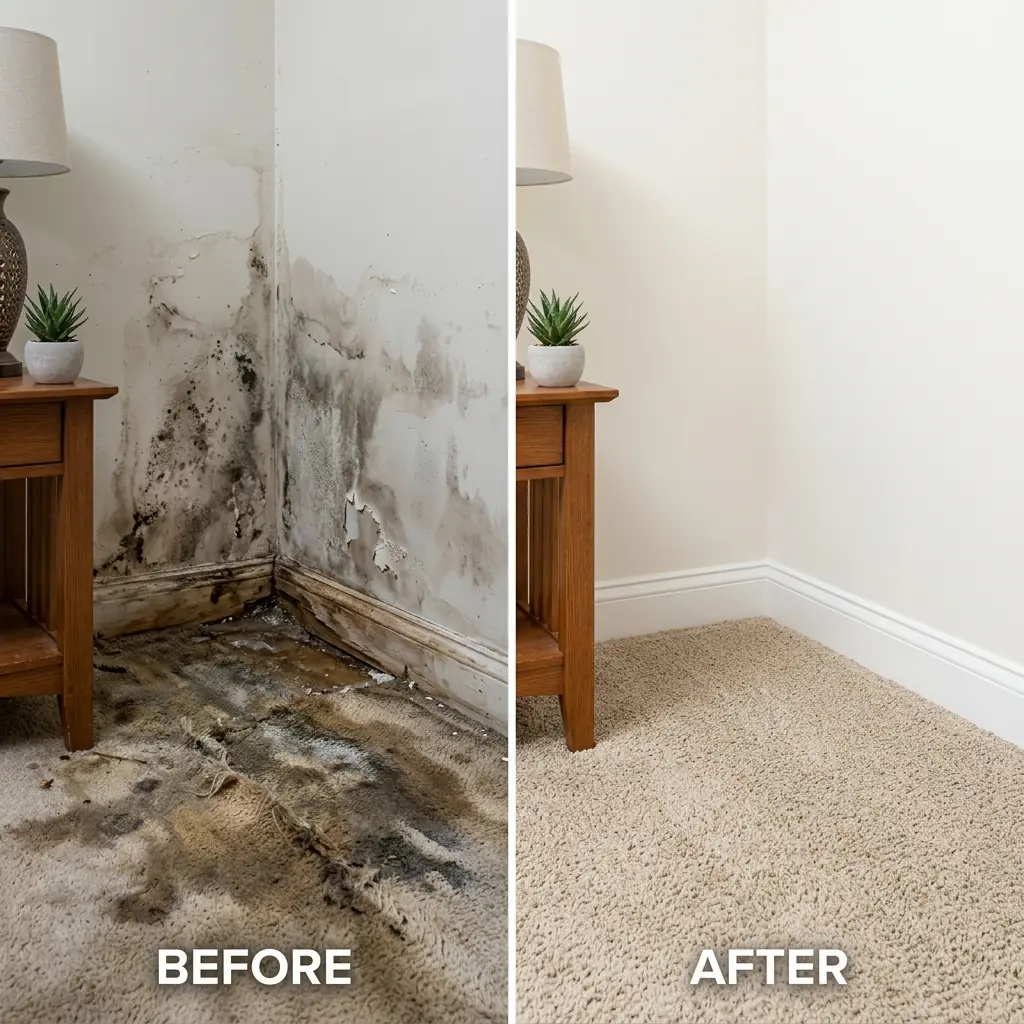
The Three Factors That Determine Permanence
Whether damage is reversible depends on the material itself, how long it stayed wet, and the water category. Hard, non-porous surfaces like tile and sealed concrete can often be fully restored. Porous materials like drywall, insulation, and carpet padding have a much shorter window before damage becomes irreversible, and that window shrinks further with contaminated water.
Drywall: Often Salvageable, Sometimes Not
Drywall exposed to clean water and dried within 24 to 48 hours can often be saved, since the gypsum core dries without losing structural integrity. Drywall that's stayed wet longer, swollen, crumbling, or sagging, or that contacted contaminated water, needs removal and replacement. Our structural drying process assesses each section individually rather than assuming the worst.
Hardwood Flooring: A Narrow Window
Hardwood that's cupped slightly from moisture exposure can sometimes flatten back out with proper drying, if caught within the first day or two. Severe warping, buckling, or finish damage usually means the wood has reached a point where drying won't reverse the structural change. Our hardwood floor water damage page covers the specific drying methods we use to maximize what can be saved.
Insulation: Almost Always Needs Replacement
Wet insulation loses its R-value permanently and doesn't regain it through drying, even when it appears to dry out visually. This applies whether it's wall insulation or basement insulation, and replacement is typically the right call regardless of water category or response time.
Basement Materials: Different Rules Apply
Basements run more humid than above-grade spaces, which shortens the window for porous materials there compared to the same materials upstairs. Finished basement drywall and carpet often need a faster decision than the same materials in a bedroom. Our basement water damage team accounts for this difference when assessing what can be saved.
How We Make the Save-or-Replace Call
We use moisture meters to measure actual saturation levels rather than guessing from appearance, and we explain our reasoning rather than defaulting to either extreme. Materials genuinely on the line get a real attempt at drying before any removal decision, since replacing something that could have been saved isn't in your interest or ours.
Not sure if your Wilmington home's water damage is permanent? Call us at (302) 360-1217 for an honest, measured assessment before any decisions get made.